

From Visibility to Value: Why Equestrian Sponsorship Needs a Rethink
For years, sponsorship across luxury and sport has relied on a simple equation: more visibility equals more value. The logic was straightforward, if a brand appeared often enough, in enough places, success would follow. That assumption is now being challenged across fashion, culture, and sport.
In a world where algorithms distribute content endlessly, visibility alone no longer confers status. When everything is seen everywhere, meaning erodes. Attention still exists, but it has become more selective, more discerning, and far harder to earn. The question sponsors are now asking is not how many people saw this, but what did that audience actually experience?
Equestrian sport sits directly in the path of this shift.
Why Exposure No Longer Guarantees Impact
Despite its premium positioning, much of equestrian sponsorship remains rooted in surface exposure. Logos on boards, saddle pads, start lists, and livestream graphics continue to deliver reach, but often with limited recall or emotional connection.
This matters because luxury brands, in particular, are moving away from broad awareness models and toward deeper indicators of value: cultural alignment, audience quality, sentiment, and long-term brand equity. Being present is no longer enough. Brands want to be understood.
Equestrian sport faces a unique challenge here. Its audiences are knowledgeable, invested, and highly attuned to credibility. Yet the sport is often presented in compressed, highlight-driven formats that flatten complexity and strip away context. The result is abundance without meaning, plenty of content, but little cultural depth.
The Shift From Display to Behaviour
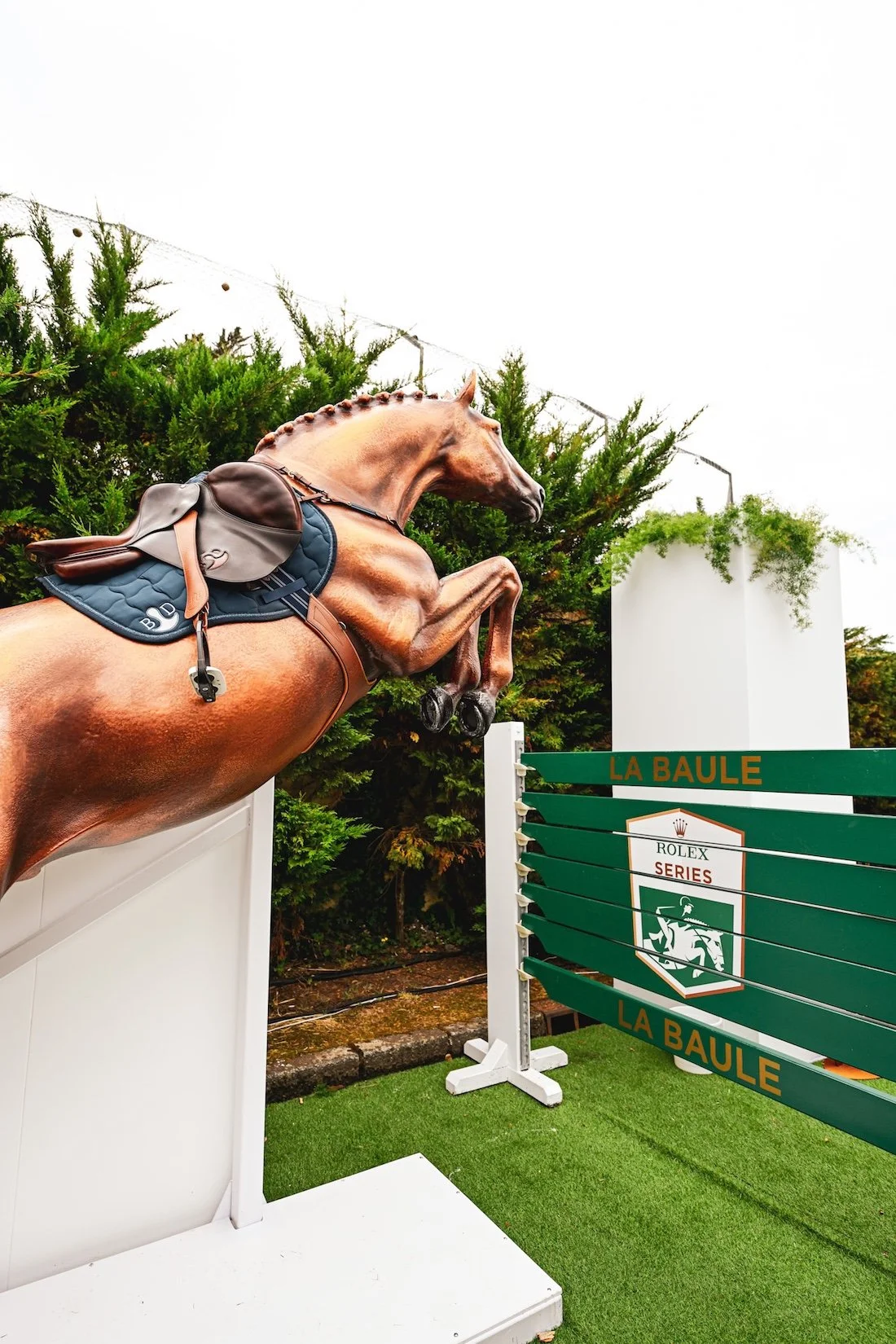
Across culture, status is increasingly defined by behaviour rather than display. What audiences admire now is not simply what someone owns or consumes, but what they commit to, understand, and sustain over time.
This shift plays directly to equestrian sport’s strengths. Horsemanship, training, welfare decisions, progression across seasons, and the long arc of horse–human partnerships all reward patience and knowledge. These are not instant-gratification narratives, but that is precisely what makes them valuable.
However, to capitalise on this, the sport must resist the temptation to package itself like mass entertainment. When equestrianism is reduced to spectacle alone, it competes on the wrong terms, and loses the very qualities that make it distinctive.
Phygital Is About Continuity, Not Tech
“Phygital” is often misunderstood as a technological add-on: QR codes, second screens, or novelty activations. In reality, it is about continuity between the live event, the digital narrative, and the lasting meaning audiences take away.
Other sports have demonstrated this clearly. Formula 1, tennis, and football have all invested in linking physical attendance with structured storytelling, data-rich context, and controlled digital environments. Sponsors are no longer just visible; they are embedded within coherent story worlds.
Equestrian sport has yet to fully make this transition. Live events and digital outputs are frequently treated as separate channels, and data is often fragmented or retrospective. When these elements are not connected, sponsors struggle to see, or prove, value.
Why Measurement Has Become Strategic
This shift in expectations has made measurement a decisive factor. Attendance figures and impression counts no longer satisfy sponsors who are accountable for brand impact across multiple markets.
Leading sports have responded by developing valuation frameworks that translate cultural presence into comparable, defensible metrics. These models are not about reducing sport to numbers, but about protecting commercial sustainability.
Historically, equestrian sport has lacked this kind of shared measurement language. As sponsorship decisions face greater scrutiny, that gap becomes a risk, not just commercially, but reputationally.
At EQuerry, our approach focuses on earned media value alongside authority and relevance, recognising that influence in equestrian sport is built through credibility, performance, trust, and contribution over time. When sponsors can see why certain partnerships work, confidence, and investment, follows.
The Strategic Choice Ahead
Equestrian sport already embodies many of the values modern audiences admire: discipline, care, expertise, and long-term thinking. The challenge is not authenticity, but translation.
Events, federations, and rights holders now face a choice. Continue prioritising visibility and risk becoming background noise, or invest in narrative, continuity, and measurement that allow the sport, and its sponsors, to occupy meaningful cultural space.
Those who make the shift will not only retain partners, but redefine what equestrian sport represents in a crowded global landscape.
Want the full story?
Read the complete feature “From Wallpaper to Cultural Capital: The Future of Equestrian Event Sponsorship” to explore detailed insights ahead of the 2026 event landscape.
Stay ahead of the conversation: Subscribe to the EQuerry Newsletter for monthly analysis on equestrian industry trends, governance, and marketing innovation.