

Keeping Young Riders in the Saddle: The Challenge of Youth Development
For many riders, a lifelong connection to equestrian sport begins in childhood, shaped by early experiences such as riding lessons, pony club involvement, and first competitions. While global interest in equestrian sport among young people remains strong, maintaining participation through adolescence continues to be a significant challenge. This issue is not unique to equestrianism; across the broader sports landscape, engagement typically declines during teenage years. Data from The Aspen Institute highlights this trend, with participation dropping notably between elementary and high school ages.
In equestrian sport, this creates a complex dynamic. On one hand, grassroots participation remains healthy. In the UK alone, nearly 200,000 young people ride weekly, and participation among 15 to 24-year-olds has grown in recent years. On the other hand, organisers frequently report inconsistent competition entries and volunteer shortages, suggesting that while interest exists, long-term engagement is less stable. At the elite level, the picture differs again: a growing proportion of top riders are under 30, indicating that those who do remain in the system are progressing faster and reaching higher levels earlier.
This contrast points to a central issue: the gap between participation and progression. While millions engage with horses recreationally, relatively few transition into structured competitive pathways, raising questions about how accessible and visible these pathways truly are.
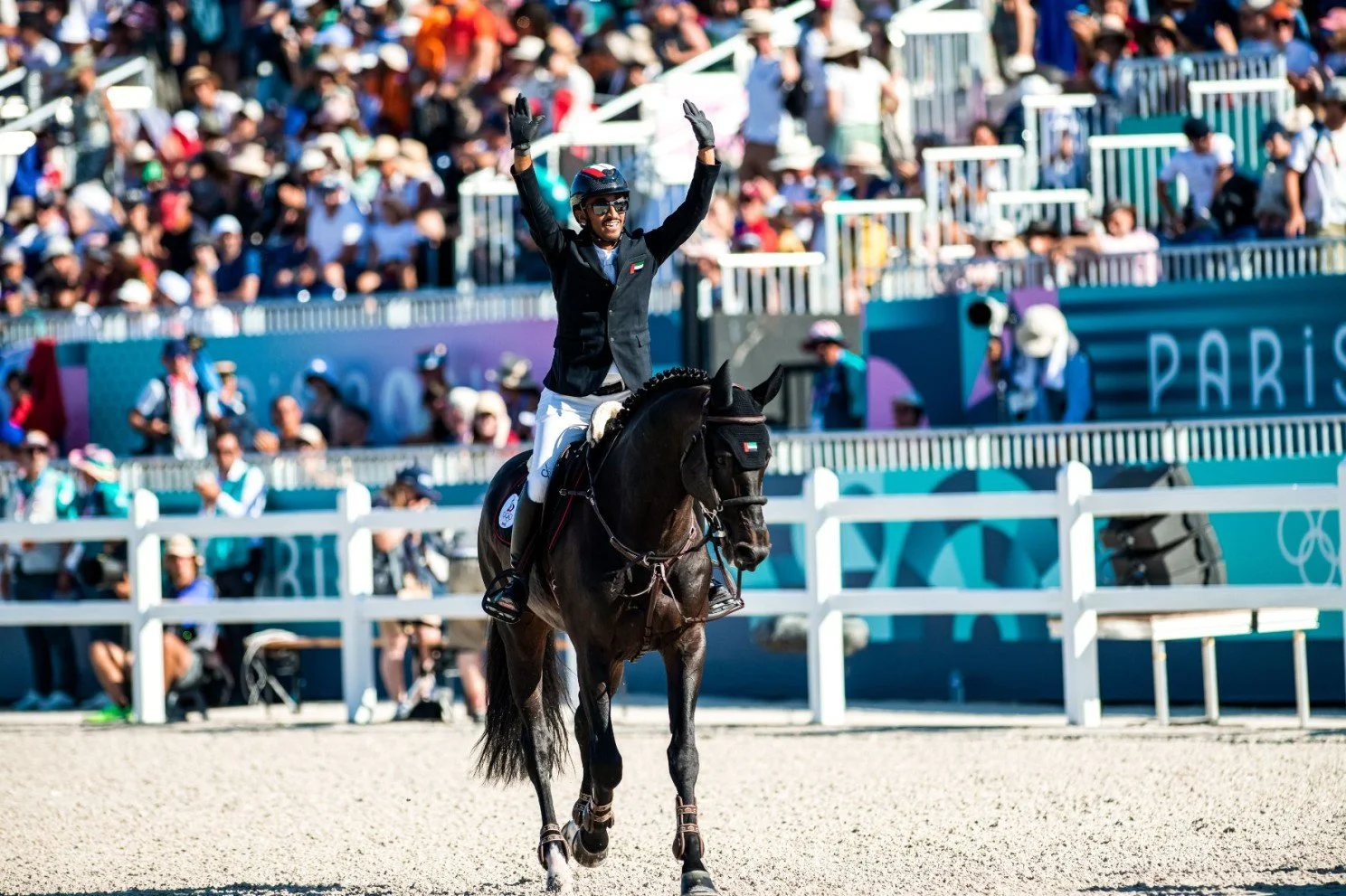
At 21 years old, Omar Abdul Aziz Al Marzooqi (UAE) was the youngest equestrian athlete at the Paris 2024 Olympics. Image: Cara Grimshaw for EQuerry Co.
The Pathway Challenge
Unlike sports such as football or athletics, equestrian development has historically lacked a clearly defined, universal pathway. Progression is often shaped by access to horses, financial resources, personal networks, and opportunity rather than a structured system. While this organic model has produced exceptional athletes, it can make advancement difficult to navigate, particularly for newcomers.
Transitions between stages, such as from riding school to competition, from pony to young rider levels, and from youth to senior sport, often entail increased costs, time commitments, and performance expectations. These barriers can discourage continued participation, especially during adolescence when competing priorities such as education intensify.
Geography further complicates the picture. In some countries, well-developed federation systems and competition structures support progression. In others, limited infrastructure and higher costs restrict access. Even within countries, disparities between regions can influence opportunities. For example, systems that offer both affiliated and unaffiliated competition, such as in the UK, provide multiple entry points, whereas other nations may have more rigid structures that limit flexibility.
Social and Psychological Pressures, and the Role of Institutions
Today’s young riders also face a more complex social environment than previous generations. The pressure of competition is often compounded by the visibility of social media, where curated highlights and constant comparison can affect confidence and wellbeing. Research from Loughborough University indicates that online environments can contribute to increased psychological stress among athletes, even in the absence of direct criticism.
Within equestrian communities, online discussions, particularly around training methods or competition outcomes, can become polarised. For young riders still forming their identity in the sport, navigating these conversations can be challenging. Combined with the traditional pressures of competition, this creates an environment where emotional resilience is increasingly important but not always actively supported.
Recognising these challenges, governing bodies and federations are placing greater emphasis on youth development. The Fédération Équestre Internationale has highlighted youth participation as a key focus, reflecting a broader understanding that the sport’s future depends on sustainable development pathways. Across Europe, initiatives are emerging to address these issues. The European Equestrian Federation has launched its “Next Gen” programme, encouraging knowledge sharing between national federations. Case studies such as Norway’s Ride2gether initiative demonstrate alternative approaches, focusing on team-based competition without the pressures of selection or championships to maintain motivation during critical teenage years. Similarly, France’s Generali Open de France provides a large-scale grassroots competition structure that connects local participation to national finals, offering a clearer sense of progression. Other federations are exploring multidisciplinary training programmes, wellbeing initiatives, and leadership roles within youth teams.
While approaches differ, a common theme is emerging: youth development requires not only attracting participants but also supporting them through structured, inclusive, and sustainable systems.
Lessons from Other Sports
Other sports offer valuable insights into how structured pathways can sustain participation. Research from the International Olympic Committee suggests that elite performance typically requires 8 to 12 years of systematic development, underlining the importance of long-term planning.
Sports such as football and rowing maintain large participation bases supported by clear progression routes, even though only a small percentage reach elite levels. Crucially, these systems are not solely focused on producing top athletes. They also support recreational participation, coaching, and community involvement, recognising that a broad base is essential for long term sustainability.
For equestrian sport, this does not mean replicating these models exactly, but rather adapting their underlying principles, clarity, accessibility, and long term support.
Building Sustainable Futures
Ultimately, the challenge facing equestrian sport is not a lack of interest, but a need for clearer, more accessible pathways that allow young riders to envision a future within the sport. When progression feels unattainable, participation often declines during the very years when riders are developing key skills and confidence.
Investment in youth development through funding, coaching, competition opportunities, and wellbeing support is therefore critical. Equally important is collaboration between federations, clubs, and industry stakeholders to create systems that are both inclusive and sustainable. Encouragingly, the growing number of initiatives worldwide suggests increasing recognition of this need. As the sport continues to evolve, the ability to retain young riders and guide them through meaningful development pathways will play a defining role in shaping its future.
Want the full story?
Read the complete feature “Keeping Young Riders in the Saddle: The Challenge of Youth Development” for more information.
Stay ahead of the conversation: Subscribe to the EQuerry Newsletter for monthly analysis on equestrian industry trends, governance, and marketing innovation.